

I'll be honest: I once had five serums on the go and a bathroom shelf that looked like a chemistry lab. My skin wasn't glowing. It was furious.
So when dermatologists said this month that most viral skincare videos are basically misinformation with good lighting, I wasn't shocked. The good news is you don't need ten actives. You need the right three or four, used at the right time of day.
Here's how vitamin C, retinol, peptides and hyaluronic acid fit together, minus the drama.
The TikTok routine problem: more isn't better
At the big European dermatology conference (EADV) in Vienna this autumn, researchers looked at 38 of the most popular Korean skincare videos on TikTok. Nearly 95% contained at least one misleading claim. Not one was made by a dermatologist, and hardly any mentioned irritation or sun protection (Dermatology Times).
A second study followed 94 people whose skin flared up after using products they'd seen on social media. Almost two-thirds were using more than three active ingredients at once. Exfoliating acids, over-the-counter retinoids and vitamin C serums were among the most common culprits.
To be fair, the researchers weren't saying K-beauty is bad. Their point was that copying a 12-step routine made for someone else's skin is a gamble. Ingredients that are brilliant on their own can gang up on you when you stack them all at once.
So let's keep it simple.
Your four skincare heroes in plain English
Vitamin C: your morning bodyguard
Vitamin C is an antioxidant. Think of it as a shield that helps protect your skin from the daily grind of pollution and UV. It's also a go-to for brightening dull skin and helping the look of uneven tone. It works best in the morning, under your SPF. Try our Morning Vitamin C Serum.
Retinol: the night-shift worker
Retinol is a form of vitamin A and probably the most researched anti-ageing ingredient you can buy without a prescription. It encourages skin to renew itself, which helps smooth the look of fine lines and texture over time. It's also the one most likely to sting if you rush it. Start slowly and use it at night, because sunlight breaks it down. Our Evening Retinol Face Serum is made for exactly that.
Peptides: the quiet achievers
Peptides are short chains of amino acids, the building blocks of proteins like collagen. They're gentle, they get on with nearly everything, and they help skin look firmer and bouncier. Our Caviar Gold Peptide Serum pairs a peptide complex with hyaluronic acid.
Hyaluronic acid: the big drink of water
Don't let the word "acid" scare you. Hyaluronic acid doesn't exfoliate. It holds on to water, so your skin looks plumper and fine lines look softer. It plays nicely with everything, which makes it the peacemaker of your routine.
Morning vs evening: the simple split
The easiest way to use vitamin C and retinol without them falling out is to give them separate shifts.
Morning
- Cleanse (a splash of water is fine if your skin's dry)
- Vitamin C serum
- Hyaluronic acid or peptide serum, if you use one
- SPF 50, every day, even when it's grey. Our SPF 50 Tinted Face Moisturiser does moisturiser, protection and a bit of coverage in one go.
Evening
- Cleanse properly, especially if you've worn SPF
- Retinol (a pea-sized amount for your whole face)
- Peptide or hyaluronic acid serum, or a simple moisturiser, to cushion it
That's it. Four steps in the morning, three at night, and you can do both half asleep. If you want the shortcut, our Vitamin C + Retinol Serum Duo is literally this routine in a box.
Why split them? Vitamin C pairs with SPF to help protect your skin during the day. Retinol breaks down in sunlight, so it works best overnight. Keeping them apart also means less chance of irritation, which is the whole point.
Which ingredients go together (and which to space out)
Here's the cheat sheet. Screenshot it, stick it on the bathroom mirror, whatever works.
|
Combo |
Verdict |
How to use it |
|---|---|---|
|
Vitamin C + hyaluronic acid |
Great together |
Morning, vitamin C first, then hyaluronic acid |
|
Retinol + hyaluronic acid |
Great together |
Evening; hyaluronic acid helps with retinol dryness |
|
Retinol + peptides |
Great together |
Evening, retinol first, then peptides |
|
Vitamin C + peptides |
Usually fine |
Morning or evening |
|
Vitamin C + retinol |
Fine, but split them |
Vitamin C in the morning, retinol at night |
|
Retinol + exfoliating acids (AHA/BHA) |
Space out |
Use on different nights, or skip the acid while your skin gets used to retinol |
|
Retinol + microneedling |
Space out |
Pause retinol for a few days before and after |
The microneedling question
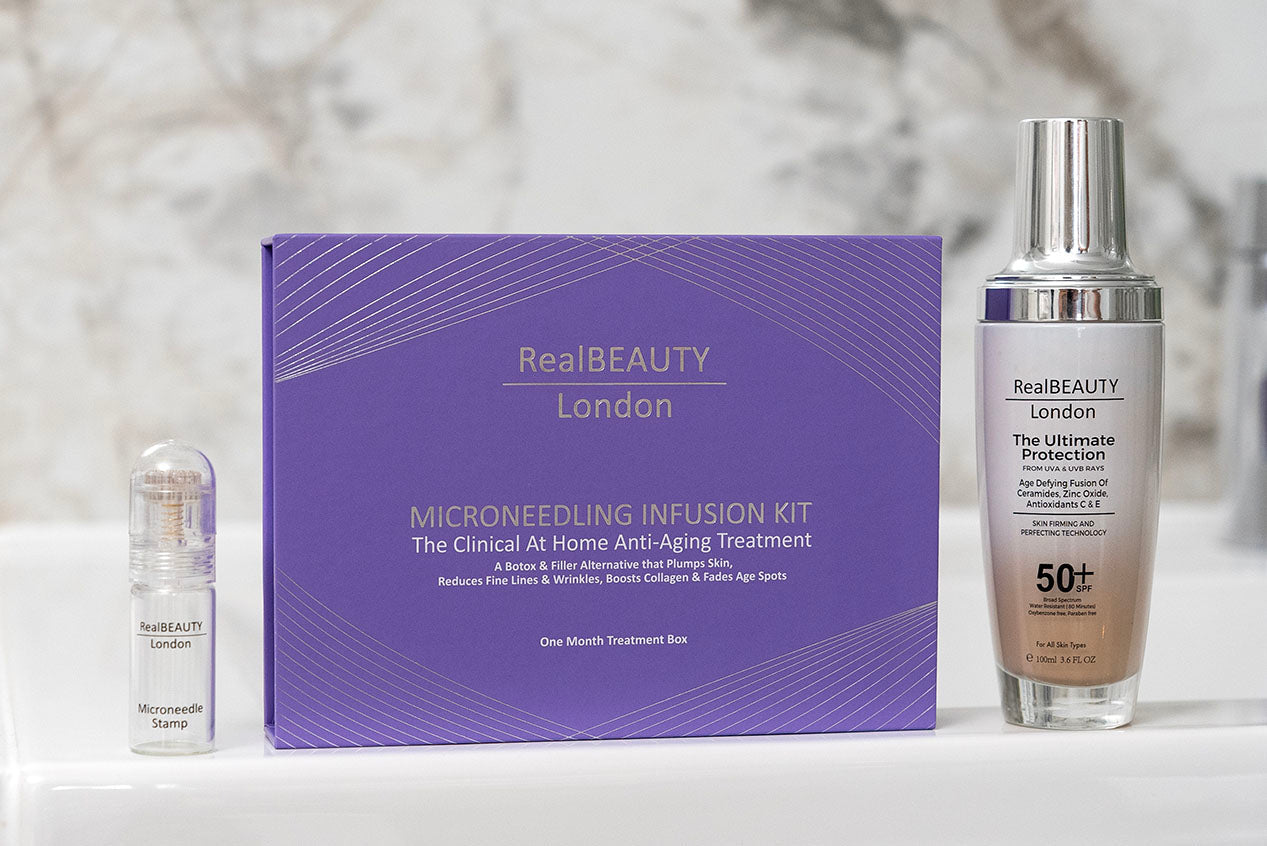
Microneedling creates tiny channels in your skin so serums can sink in, which is the whole idea of our Microneedling Infusion Kit. It also means skin is more sensitive for a little while afterwards.
Straight after microneedling, stick to gentle, hydrating serums like hyaluronic acid or peptides. Leave retinol, vitamin C and exfoliating acids for a few days, and always follow the instructions that come with your kit. New to it? Start with our beginner's guide to microneedling at home and How To Derma Roll.
One more rule of thumb
Try one new active at a time and give it a few weeks before adding the next. If something goes wrong, you'll know exactly who to blame.
How I cut my routine down (and my skin finally calmed down)
After I had my son, my skin went dull and patchy, with pigmentation I'd never had before. Naturally, I threw everything at it. Acids, serums, masks, whatever the internet told me that week. [Add a real detail here: the product or moment you realised it was too much.]
What actually helped was doing less, more consistently. Vitamin C and SPF every morning. Retinol a few nights a week, building up slowly. Something hydrating on top. [Add how long it took before you noticed a difference, in your own words.]
I'm 43 now and my skin looks better than it did in my thirties. Not because I found a miracle product, but because I stopped making my skin fight five things at once. That's the whole reason Real Beauty London has a small range rather than a ten-step routine.
Signs you've overdone it (and how to calm things down)
Your skin is pretty good at telling you when it's had enough. Watch for:
- Stinging or burning when you put on products that never bothered you before
- Tightness, flaking or a shiny, "cling film" look
- Redness that hangs around
- A sudden crop of breakouts
If that sounds familiar, take a break from your actives for a week or two. Just cleanse gently, moisturise and wear SPF. Hyaluronic acid and peptides are usually fine to keep, as they're there to soothe and hydrate.
Once your skin feels normal again, bring things back one at a time. Start retinol at two or three nights a week. If the redness, pain or rash doesn't settle, or you're worried, see your GP or a pharmacist.
It's also worth knowing that this time of year makes skin touchier anyway. Cold wind and central heating dry it out, so you might need to go a bit gentler in winter than you did in summer.
FAQ
Can you use vitamin C and retinol on the same day?
Yes. The easiest way is vitamin C in the morning under SPF and retinol at night. You get the benefits of both, with less chance of irritation than layering them together.
Can you use retinol after microneedling?
Not straight away. Your skin is more sensitive after microneedling, so pause retinol for a few days and use gentle, hydrating serums instead. Always follow your kit's instructions.
Do you need hyaluronic acid if you already use a moisturiser?
You don't have to, but they do different jobs. Hyaluronic acid draws water into the skin and a moisturiser helps keep it there. If your skin feels tight or dry, especially in winter or while using retinol, using both can make a real difference.
The takeaway? Your skin doesn't need a TikTok-sized routine. It needs a few good ingredients, at the right time, used consistently. Start with SPF, add a vitamin C, and build up from there.


