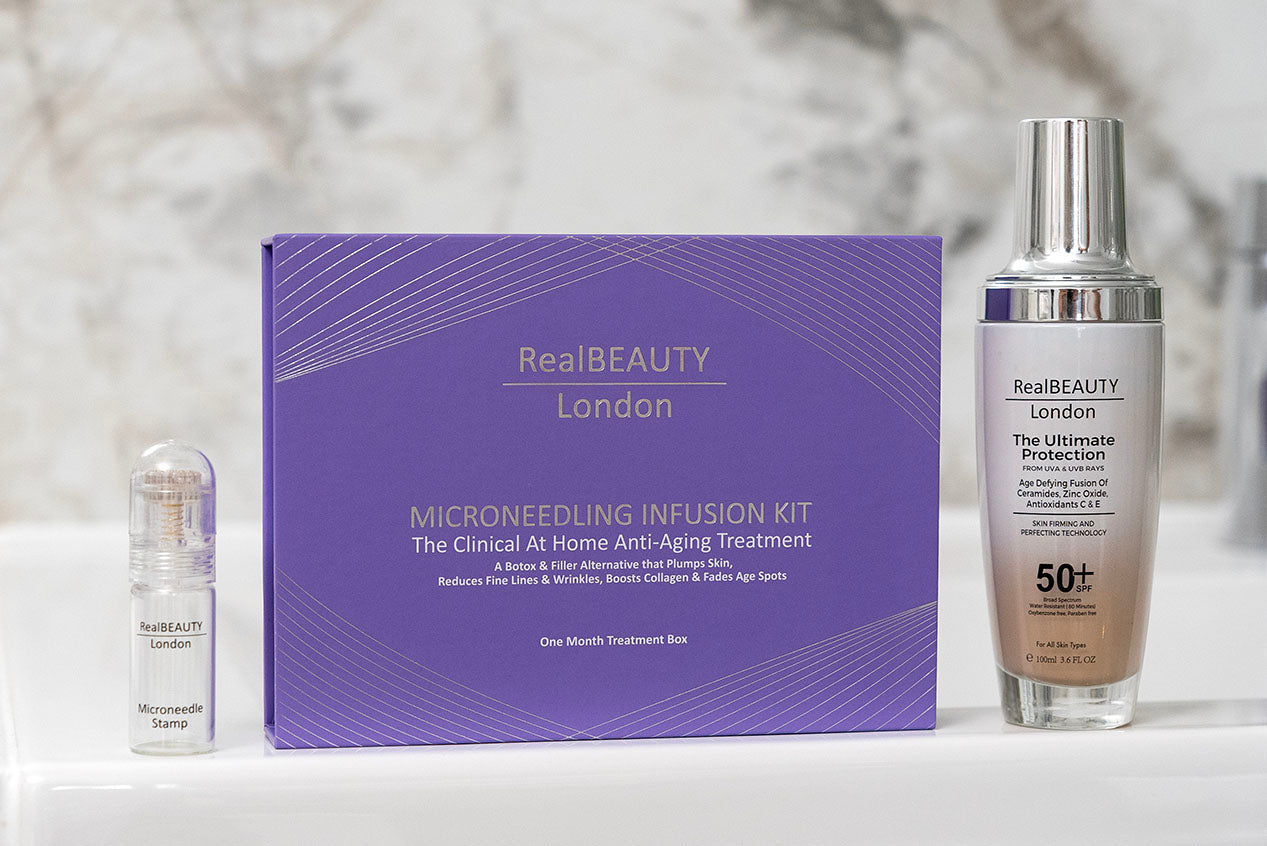


You know that post-facial glow? The one you usually only get from a £150 hour in a chair somewhere in Marylebone? Micro-infusion is the at-home version of that, and it works because of what's happening underneath your skin, not on top of it.
But if you've ever wondered what your skin is actually doing while you're using a Microneedling Infusion Kit, what's triggering the glow, why your skin feels different the next morning, and why the results compound over time, here's a proper look at what's going on beneath the surface.
First, the basics: what micro-infusion actually is
Micro-infusion combines two techniques in one tool. Microneedling (creating tiny channels in the skin) and direct serum delivery (pushing active ingredients through those channels). Traditional microneedling rollers create the channels, then ask you to apply serum on top and hope for the best. Micro-infusion delivers the serum at the same moment the channels are made, so the active ingredients reach the layer of skin where they can actually do something.
The result: a treatment that's significantly more effective than topical skincare alone, without the downtime of an in-clinic procedure.
What's happening on the surface: the channels
When you press the Microneedling Infusion Kit against your skin, the spring-loaded mechanism pushes 24-karat gold clinical-grade tips into the upper layer of skin (the epidermis) at a controlled depth.
These aren't "needles" in the way most people picture needles. They're micro-fine. The channels they create are invisible to the naked eye and close within minutes to hours. But while they're open, they do two important things:
- They bypass the skin's natural barrier. Your stratum corneum (the outermost layer) is designed to keep things out, including most of the active ingredients in your serums. The channels give those actives a temporary direct route in.
- They signal the skin that there's been a tiny, controlled injury. This is what triggers everything below.
What's happening underneath: the wound-healing cascade
This is where it gets interesting. The moment those micro-channels form, your skin treats it as a controlled injury and kicks off a process called the wound-healing cascade. It happens in three overlapping phases.
Phase 1: Inflammation (0 to 24 hours) Your skin sends signalling molecules to the affected area. Blood flow increases. This is what causes the slight pink flush you'll see immediately after. It's not damage, it's your skin paying attention.
Phase 2: Proliferation (1 to 7 days) This is the part everyone cares about. Fibroblasts (the cells responsible for producing collagen and elastin) get activated and start producing new tissue. New capillaries form. Skin cell turnover speeds up. This is when "your skin looks better" stops being a vibe and starts being measurable.
Phase 3: Remodelling (weeks to months) The new collagen produced in phase 2 reorganises itself into stronger, more structured fibres. Fine lines soften. Skin texture refines. Tone evens out. This is why the results of micro-infusion compound. The more consistently you treat, the more remodelled, structured collagen you build over time.
The serum part: why what you infuse matters
The micro-channels are only half the magic. The other half is what's actually being delivered through them.
The Microneedling Infusion Kit uses clinical-grade actives designed to be infused, not just sat on top of the skin. We're talking hyaluronic acid (for deep hydration), peptides (for collagen support), and skin-brightening ingredients that, when delivered into the channels, reach the layer of skin where they can genuinely influence cell behaviour.
This is the bit topical skincare struggles to do. Apply hyaluronic acid to clean skin and most of it sits on the surface. Apply it through micro-channels and it reaches the layer where your skin actually uses it.
If you want to layer the effect, pairing micro-infusion sessions with daily actives like the Caviar Gold Peptide Serum or the Morning Vitamin C Serum keeps the collagen-building and brightening signals going between treatments.
Why you might feel "tight" the next day (and why that's a good sign)
A lot of people describe their skin feeling slightly tight, plump, or extra-hydrated the morning after a micro-infusion session. That's not dryness, it's actually the opposite. The hyaluronic acid that's been infused is binding water within the skin, and the early-stage collagen response is making the skin feel firmer and more lifted.
It's the same sensation people describe after a professional facial, and for the same reason.
What about aftercare?
For the 24 to 48 hours after a session, your skin is in active repair mode. A few things matter:
- No retinol, no acids, no exfoliants for at least 24 hours. Your skin is busy.
- Hydrate generously. Keep the moisture going with gentle, non-active products.
- SPF is non-negotiable. Freshly treated skin is more photosensitive, which means UV damage can undo your hard work and even cause pigmentation. A daily SPF like the SPF 50 Tinted Face Moisturiser is essential here. It protects the new skin you're building and gives you a flattering finish while it does.
If you want everything in one go, the Microneedling Bundle pairs the kit with SPF and serum. The treatment plus the aftercare needed to actually see the results.
So how often should you do it?
For most skin types, every 4 to 6 weeks is the sweet spot. That gives your skin enough time to move through the proliferation and remodelling phases between sessions, so each treatment builds on the last rather than interrupting the healing in progress.
Think of it less like a single event and more like training. One session feels good. Six sessions, eight weeks apart, change the texture and tone of your skin meaningfully.
The takeaway
Micro-infusion works because it does two things at once. It gets active ingredients into the layer of skin that can use them, and it triggers your skin's own repair machinery to produce new collagen. The glow you see the next day is real. The improvements you see at the three-month mark are even more real, because by then, your skin has had time to remodel.
It's not magic. It's just biology, working with you instead of against you.
Ready to start? Explore the Microneedling Infusion Kit or shop the full Microneedling Bundle to get the treatment, the SPF, and a daily serum to keep the results compounding.


