

There's a quiet shift happening in beauty routines. The full-coverage foundation that used to be a non-negotiable morning step is giving way to something lighter, simpler, and arguably smarter. The tinted SPF.
But is it really a swap? Or are foundation and tinted SPF doing different jobs that just happen to overlap on the surface?
If you've ever stood in front of your bathroom mirror wondering whether you actually need both, here's an honest breakdown of what each one does, where they overlap, and what your skin genuinely needs on a normal day.
What foundation is actually for
Foundation, at its core, is a coverage product. It's designed to even out skin tone, mask blemishes and redness, and give you a uniform canvas, usually with buildable layers if you want more.
Modern foundations have evolved well beyond the heavy, mask-like formulas of a decade ago. Many now include hyaluronic acid, niacinamide, even SPF. But the primary job hasn't changed: foundation exists to make your skin look more uniform.
What it isn't designed to do, no matter what the label says:
- Reliably protect you from UV. Foundations with SPF are tested the same way as sunscreens, which means in theory the SPF rating is accurate. In practice, you'd need to apply roughly a teaspoon of foundation to your face to actually hit that protection level, and almost nobody does. A normal foundation application gives you a fraction of the labelled SPF.
- Hydrate or treat skin meaningfully. Even "skincare-infused" foundations are still primarily pigment and coverage products. The active ingredients are usually present in low concentrations.
- Replace a sunscreen step. This is the big one. Dermatologists are nearly unanimous: foundation with SPF is a bonus, not a substitute.
What tinted SPF is actually for
Tinted SPF is a sunscreen first. The tint is the bonus.
- A good tinted SPF gives you:
- Proper broad-spectrum UV protection at the labelled level (assuming you apply enough)
- A light wash of colour that evens out tone without fully covering it
- Skincare grade ingredients that hydrate, brighten or protect against environmental damage
- A second-skin finish that lets your actual skin show through
The category has come a long way. Older tinted sunscreens had two big problems: they left a white or grey cast on darker skin tones, and they felt heavy or greasy. Modern formulas, especially mineral ones using micronised zinc oxide with iron oxides for tint, solve both.
There's also a specific advantage tinted SPF has over clear SPF that doesn't get discussed enough: the iron oxides in tinted formulas help protect against visible light, particularly the high-energy visible (HEV) light that contributes to melasma and post-inflammatory hyperpigmentation. Clear sunscreens don't do this. So if pigmentation is a concern, a tinted SPF is genuinely better protection than a clear one.
So what does your skin actually need daily?
Here's the honest answer most beauty articles dance around: on a normal day, for most people, tinted SPF alone is enough.
If your skin is reasonably even-toned, you're not covering specific blemishes, and you want a polished but natural look, a good tinted SPF replaces three steps in one go. A moisturiser, sunscreen, and light coverage. You get the protection your skin needs and a finish that looks like skin rather than makeup.
If you have more to cover; significant redness, acne, scarring, or you simply prefer a fuller finish for work or events, the answer isn't to skip the SPF. It's to layer.
The correct order is:
- Skincare (cleanser, serum, moisturiser)
- Tinted SPF as your protection layer, applied generously
- Foundation or concealer on top, only where you actually need extra coverage
That way you get full UV protection underneath, plus the coverage you want on top. The mistake people make is reversing this, applying foundation first and assuming the SPF in it will protect them. It won't, not at the amounts you'll actually wear.
The application question that matters
Whichever route you go, the amount you apply is what makes or breaks UV protection.
The dermatologist-approved guideline is roughly half a teaspoon for the face and neck combined, or what's often called the "two-finger rule" — two full strips of product along your index and middle fingers. Most people apply a fraction of that.
This is where tinted SPF has a quiet advantage. Because it's a single, generous step rather than a thin layer underneath the foundation, you're far more likely to actually apply enough. With foundation with SPF, the temptation is to use less because you don't want to look cakey, but the protection drops accordingly.
The case for owning both
This isn't an either/or argument. There's a strong case for keeping a foundation in your routine for the days you want it; events, photography, when you simply feel like more of a made-up look, while making tinted SPF your everyday default.
Think of it like this:
- Tinted SPF is your daily uniform. The thing you put on without thinking, that protects your skin and makes you look pulled together with zero effort.
- Foundation is the dress-up version. The thing you reach for when the occasion calls for it.
Both have their place. But if you had to pick one for daily use, for the protection it offers, the simplicity, and the fact that it's genuinely better for your skin in the long run, tinted SPF wins.
What to look for in a tinted SPF
Not all tinted SPFs are created equal. The British Association of Dermatologists' guidance on sunscreen still applies regardless of whether yours has a tint:
- SPF 30 minimum, ideally SPF 50 for full daily coverage
- Broad-spectrum protection (UVA and UVB)
- A UVA rating of 4 or 5 stars, or the circular EU UVA logo
- A formula you'll actually wear every day. Texture and finish matter because consistency is the whole game
Beyond the basics, look for:
- Skincare ingredients you'd want anyway. Hyaluronic acid for hydration, vitamin C for brightness, antioxidants for environmental defence
- A tint that adapts rather than one fixed shade. Formulas that blend with multiple skin tones make life easier
- Mineral filters like zinc oxide if you have sensitive skin, are pregnant, or prefer a more skin-friendly ingredient list
- Ingredients you don't want. Many people now actively avoid oxybenzone, parabens, and other potentially hormone disrupting ingredients
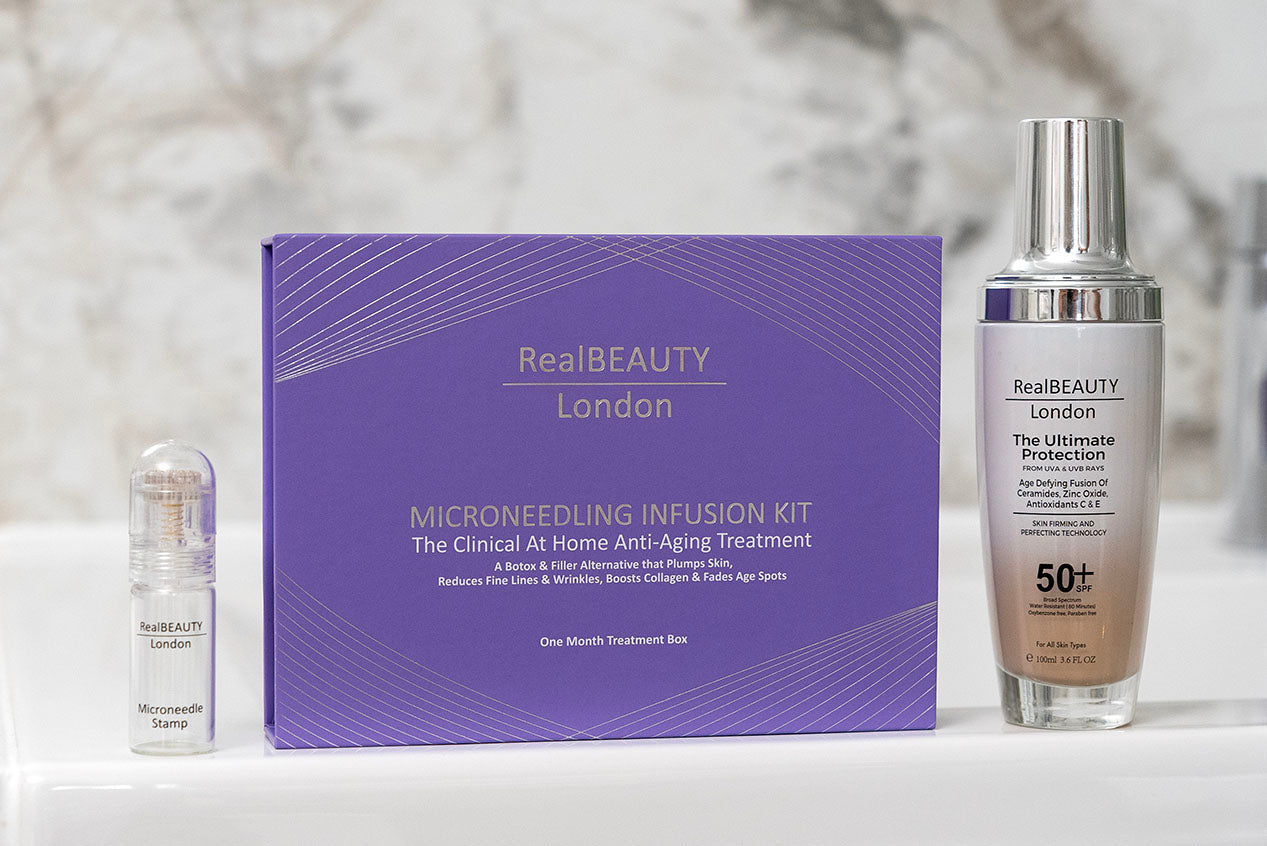
This is exactly the brief we set ourselves when we created The Ultimate Protection SPF 50. It's a tinted, zinc oxide based SPF 50 with broad spectrum UVA and UVB protection, blended with hyaluronic acid, vitamin C and Kahai nut oil to hydrate and brighten while it shields. The lightly tinted formula uses optical blurring technology to soften fine lines and even tone, so it works as a one step replacement for moisturiser, sunscreen and light foundation, or as the protection layer underneath your usual foundation on the days you want more coverage. It's eco-friendly, free from parabens and oxybenzone, safe to use during pregnancy, and suitable for all skin types and tones.
So which is better?
Foundation and tinted SPF aren't really competitors, they're tools that do different jobs. Foundation covers. Tinted SPF protects, with the side benefit of a little colour.
For most people, on most days, tinted SPF is the smarter daily choice. It gives your skin what it actually needs: real UV protection, a touch of evenness, and the kind of finish that makes you look like you slept well rather than like you're wearing something.
Save foundation for the days you want it. Make tinted SPF the daily habit your skin will thank you for.


