

If you've ever stood in front of the bathroom mirror on a grey morning, sunscreen in hand, wondering whether it's really worth the bother, you're not alone. The British weather doesn't exactly scream "skin cancer risk." We see more drizzle than direct sun. So do you actually need SPF every single day?
The honest answer: not literally every day. But probably more days than you think, and definitely more days than most people in the UK currently bother.
Here's what the science actually says, what the British Association of Dermatologists actually recommends, and how to build a sensible sun-protection habit that doesn't involve slathering on factor 50 to walk to the corner shop in February.
The thing nobody tells you about UK sunshine
There's a persistent myth that SPF is only for holidays, beach days, or that one-week heatwave we get in July. The reality is more nuanced.
According to Cancer Research UK, the sun in the UK is strong enough to damage your skin from mid-March to mid-October, even when it's cold or cloudy. Over 90% of UV rays can pass straight through cloud cover. So that overcast Tuesday in May when you didn't think twice about SPF? Your skin still got a dose.
The British Association of Dermatologists uses a clear threshold: once the UV index reaches 3 or above, sun protection is recommended. In the UK, that's broadly April through September, peaking between 11am and 3pm.
So... every day, or not?
Here's the practical breakdown:
Roughly mid-October to mid-March in the UK, the UV index typically sits at 0–2. If you have lighter skin and aren't doing winter sports at altitude or sitting next to a sunny window all day, daily facial SPF is less critical from a skin-cancer-prevention angle. Many dermatologists are relaxed about skipping it on dark, drizzly January mornings.
Roughly mid-March to mid-October, the UV index regularly hits 3 or higher, often well before it feels "sunny." This is when daily SPF on exposed skin (face, neck, ears, hands, the back of your neck if your hair is up) genuinely matters. Yes, even on cloudy days. Yes, even if you're "just popping out."
Year-round, every day, if you're someone who:
- Has a history of skin cancer or precancerous lesions
- Takes photosensitising medications (some antibiotics, retinoids, certain blood pressure drugs)
- Has a condition like lupus, vitiligo, melasma, or rosacea that's triggered by UV
- Is using active skincare (retinol, vitamin C, AHAs, BHAs). These make your skin more vulnerable to UV damage
- Spends significant time near windows (UVA passes through glass)
- Is specifically focused on preventing pigmentation, fine lines, and photoageing rather than only cancer
That last point is where things get interesting for most beauty-led readers.
The anti-ageing argument is stronger than the cancer argument
Here's something that doesn't get said enough: when dermatologists tell you to wear SPF every day, the cancer-prevention case in the UK climate is real but relatively modest in winter. The anti-ageing case is much stronger, and runs all year.
UVA rays, the ones responsible for wrinkles, loss of firmness, uneven tone, and stubborn pigmentation, make up roughly 95% of the UV radiation reaching the earth's surface. They're present whenever it's daylight. They penetrate clouds. They penetrate glass. They're remarkably consistent across the seasons compared to UVB.
If your goal is to keep your skin looking younger for longer, daily broad-spectrum SPF is genuinely the single most effective product in your routine. More than retinol. More than vitamin C. More than any serum you'll spend £80 on. Studies have repeatedly shown that consistent daily sunscreen use slows visible signs of ageing in a way nothing else applied topically reliably matches.
So the honest reframing is this: you might not need daily SPF in the UK to dramatically reduce your cancer risk in deep winter. But you almost certainly need it daily if you care about how your skin looks in ten years.
What "good" SPF actually looks like
Whatever you choose, the BAD's guidance is straightforward:
- SPF 30 or higher for adequate UVB protection (SPF 30 blocks ~97% of UVB; SPF 50 blocks ~98%)
- A UVA rating of 4 or 5 stars, or the circular EU "UVA" logo, for proper UVA protection
- Broad-spectrum labelling, which means it covers both UVA and UVB
A few practical truths most articles skip over:
Moisturiser with SPF isn't quite the same. In theory, an SPF 15 moisturiser provides SPF 15. In practice, you apply moisturiser much more thinly than dedicated sunscreen, it's rarely water-resistant, and many SPF moisturisers don't include strong UVA protection. It's better than nothing, but if you're outside for any meaningful time, a proper sunscreen wins.
Reapply if you're outside for hours. SPF degrades through the day with sweating, rubbing, and sun exposure. The morning application isn't a force field that lasts until bedtime.
The vitamin D worry is overblown. Most people get incidental sun exposure throughout the day that more than covers vitamin D needs. If you're concerned, talk to your GP about supplementation rather than skipping sunscreen.
A sensible UK routine
If you want a no-fuss approach that respects both the science and the British weather, here's a reasonable framework:
In the darker months (roughly November to February), daily SPF on the face is sensible if you use active ingredients, sit near windows, are concerned about pigmentation or ageing, or have any of the medical reasons mentioned above. Otherwise, it's not unreasonable to be more relaxed on genuinely overcast days.
In the lighter months (roughly March to October), treat daily SPF as non-negotiable on your face, ears, neck, and the back of your hands. Check the UV index in your weather app. If it's 3 or higher, you need protection on any skin you can't cover.
On strong-sun days (UV index 6+, or any time you're outside for extended periods), step up to SPF 50, reapply every couple of hours, and don't rely on sunscreen alone. A hat, sunglasses, and shade between 11am and 3pm will do more than any bottle.
The bottom line
Do you literally need SPF 365 days a year in the UK? Probably not, if you're being strict about it.
Should you wear it most days, especially from spring to autumn, especially if you care about how your skin ages, and especially if you're using actives in your routine? Yes, and the case is genuinely strong.
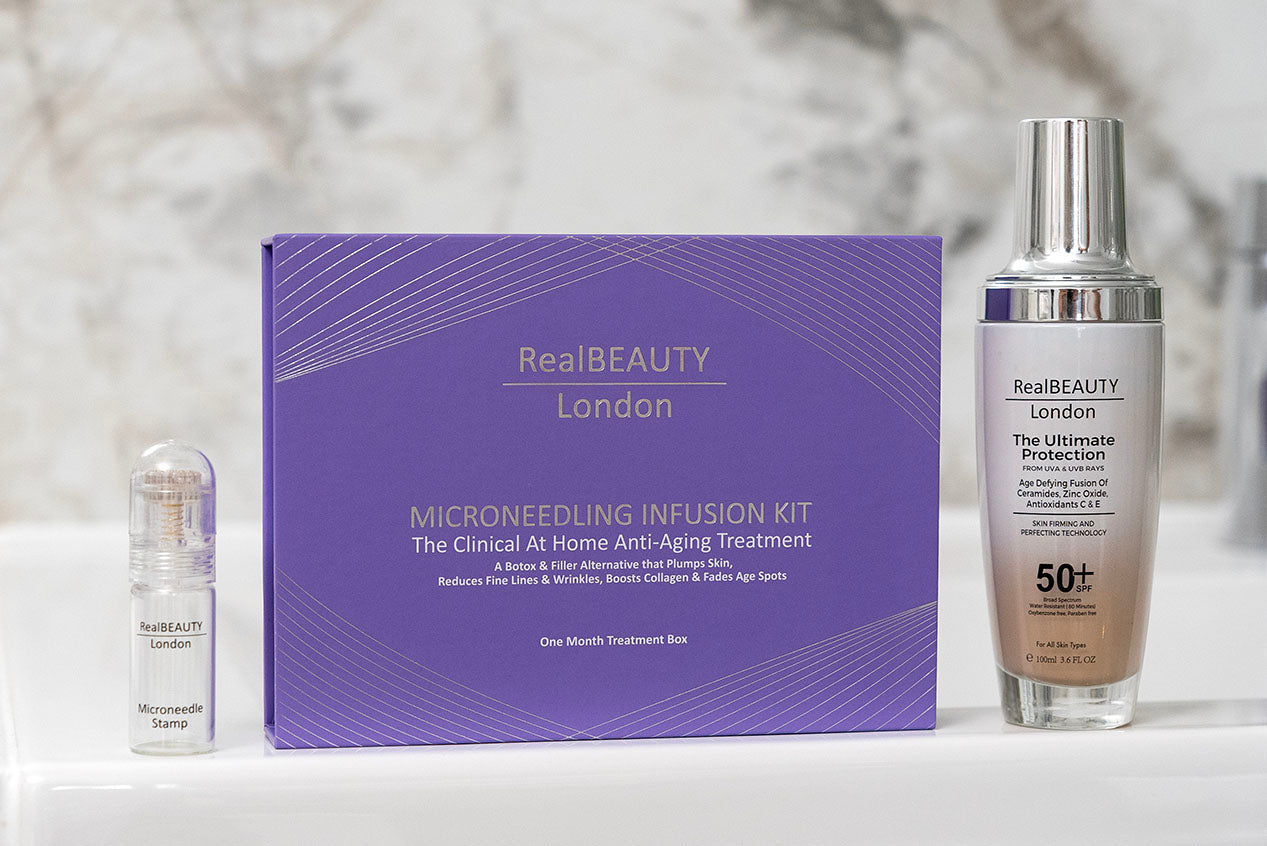
The best sunscreen is the one you'll actually wear — which is exactly why we created The Ultimate Protection SPF 50. It's a broad-spectrum, zinc-oxide-based formula with full UVA and UVB protection, blended with hyaluronic acid, vitamin C and Kahai nut oil so it hydrates and brightens while it shields. The lightly tinted, second-skin finish blurs fine lines and evens tone, meaning you can wear it on its own or under makeup without that classic SPF white cast or greasy feel. It's eco-friendly, free from parabens and oxybenzone, safe to use during pregnancy, and suitable for all skin types and tones.
In other words: it's the kind of SPF you'll genuinely reach for every morning — not the kind that lives at the back of the bathroom cabinet until your next holiday.
Your future skin will thank you, even on a grey day in London.


